
About Ryuei Ryu

The Ryuei-ryu logo, a red sun with a white globe rising above it, symbolizes Japan, the world, and unification of the karate style.
The seven white stripes beneath the globe represent the seven continents.
The first character is the surname of the 1st Soke of Ryuei Ryu Karate, Ryu Ryu Ko. The second character is the name of Norisato Nakaima Sensei. The third character means "style”.
The Ryuei Ryu Karate logo also symbolizes the beginning, or number one, representing the start of the style.
In essence, the logo encapsulates the Ryuei-ryu style's origin, its global reach, and its core philosophy of unification and new beginnings.
The
Story of
Ryuei-Ryu
Ryuei Ryu is a traditional Okinawan karate style that holds deep historical and cultural significance. It is known for preserving ancient techniques passed down through generations, emphasizing precision, kata, and a strong philosophical foundation.
Origins and Founding
Ryuei Ryu Karate traces its roots to Norisato Nakaima (Kenri), who founded the style in the 19th century. Nakaima, born in 1819 in Naha, Okinawa, was sent by his father to Fuzhou (in Fujian Province, China) to study Chinese martial arts. During his stay in China, Kenri studied under a Chinese martial arts master, Ryu Ryu Ko, believed by some accounts to be a military officer or a member of the Chinese imperial guard, learning internal and external martial arts systems, weapons, and traditional Chinese medicine.
After years of rigorous training, Kenri returned to Okinawa and passed the Chinese boxing style in secret to his son Kenchu Nakaima, who then went on to teach it only to his son, Kenko Nakaima. The techniques and forms he taught became the foundation of what is now known as Ryuei Ryu.
In the late 19th and early 20th century, along with other developments in the martial arts world, what were originally family styles started opening. For the first time, members of the public could study martial arts. Ryuei Ryu, however, continued to be kept a secret family style, to be taught only within the Nakaima family, well into the 20th century.
Signature Kata and Techniques
Ryuei Ryu karate is especially known for its unique katas, which are characterized by intricate movements, dramatic transitions, and a balance between hardness and softness - qualities that reflect the Chinese martial arts heritage of the system.
Philosophy and Legacy
The philosophy of Ryuei Ryu karate emphasizes inner strength, discipline, and the harmony between body and mind. Though deeply traditional, the style has evolved to meet modern needs without losing its historical core.
Under Sensei Sakumoto's leadership and through the work of dedicated instructors worldwide, Ryuei Ryu has grown beyond Okinawa and Japan, establishing dojos across Europe, the Americas, and Asia. It continues to influence the karate competition scene and traditional martial arts circles alike.
Lineage


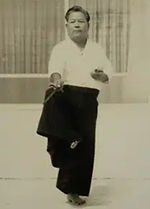
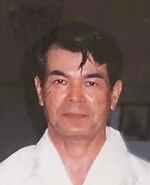

1st Soke, Ryu Ryu Ko
(1793 ~ 1882)
Ryū Ryū Ko, also known as Liu Long Gong, was a Chinese martial artist who most likely practiced the Fujian White Crane style of Kung Fu. He was also the Chief Instructor of Qing Dynasty’s Military Training School.
His most notable students included many of the founders of different Okinawan martial arts which later produced Karate.
As a result of the start of “Opium War,” the members of the school, including young martial artists, were purged and Ryu Ryu Ko hid his whereabouts. Ryu Ryu Ko was thus named the 1st generation Soke of Ryuei Ryu Karate out of respect for the first instructor who taught Norisato Nakaima.
2nd Soke, Norisato Nakaima (Kenri)
(12/11/1819 ~ 3/14/1897)
Born to a wealthy family in Naha City, Kume Mura. Norisato excelled in both martial arts and education. However, he became engrossed in martial arts and eventually, poured all the family’s fortune into the pursuit of it.
Norisato spent 5-6 years training with Ryū Ryū Ko, learning various techniques and even studying Chinese herbal medicine. He returned to Okinawa with a collection of weapons and scrolls, and began teaching the martial art he learned, known as "Ryu no Waza" (Techniques of Ryu Ryu Ko), within his family.
Norisato Nakaima's introduction of Ryuei-ryu to Okinawa significantly impacted the development of Okinawan karate, with the style becoming a recognized and respected form of martial art.
3rd Soke, Kenchu Nakaima
(8/10/1856 ~ 9/20/1953)
Even though he was rather small, standing less than 160 cm in height, it was said that his physique was like that of an animal’s hide wrapped around a skeleton made of steel rebar. He was known to be both courageous and fierce.
Until about the age of 30, he had an extremely bold streak. Once, after accepting a challenge from a famous Kama (sickle) master, a young Kenchu wrapped his Bo (staff) in a thin sheet-metal before heading off to the match.
Because his father, Norisato, depleted the family fortune, Kenchu was unable to receive an education. He worked diligently from dawn to dusk to earn a living to support his household, all the while training in Norisato’s martial arts.
Kenchu trained his son Kenkō rigorously, often telling him that, “All that was left for me is Ryuei Ryu Karate and its techniques. I am unable to leave an inheritance for you. All I can do is to keep and protect the skills that our ancestor brought back from China.”
4th Soke, Kenko Nakaima
(1911/12/23 ~ 1989/9/21)
Starting at a young age, Kenkō was trained rigorously by Kenchu, and was conferred a full mastership of Ryuei Ryu when he was 37 years old. Kenkō also studied Kendō while attending Okinawa Prefecture Teacher Training School (Okinawa ken Shihan Gakkō) and eventually earned a rank of 7th Dan Kyōshi.
He was a martial artist as well as an educator, serving as the school principal for elementary and middle schools. Kenkō frequently said that “One becomes a martial artist by first understanding what it means to be a person.” He also discussed the importance of commitment to courtesy, and on the nature of humanity.
In the 1970s, Kenkō broke with the tradition of one-child-conference and accepted students. This action was not taken out of disrespect for family’s oath, but from an understanding that such customs of secrecy was no longer relevant in the present-day society.
5th Soke, Kenji Nakaima
(5/4/1934 ~ )
Kenji, like his predecessor, is a Martial Artist and an educator. He served as a professor at University of the Ryukyus (Ryukyu Daigaku) and at other universities. He attained 7th Dan Kyōshi in Iaidō as well as 7th Dan in Jōdō.
Kenji recalled when he was a young student, Kenkō correcting his posture, and only his posture, during his martial arts training; Kenkō would instruct by saying "Do not break your posture."
With Kenji, Kenkō didn’t focus too much on technicalities but was very strict concerning Kamae (stances) and posture.
Kenji philosophized on how an Art (Karate) that was originally intended for fighting people, can be transformed into something that can re-invigorate people and contribute to society. Kenji wished for Ryuei Ryu to embody this philosophical approach.
5th Dōtō, Tsuguo Sakumoto
(12/13/1947 ~ )
An extraordinary martial artist who, starting with winning the World Karate championship at 8th WKF Championship in the Netherlands at 37 years’ old - conquered three WKF championships titles, two World Games championships, and two World Cup championships, all the while serving as the president of Okinawa-Ken-Ritsu Geijutu Daigaku (Okinawa Prefectural University of Arts).
Today, he trains the new World Champions while tirelessly working to hone his mastery of Karate.